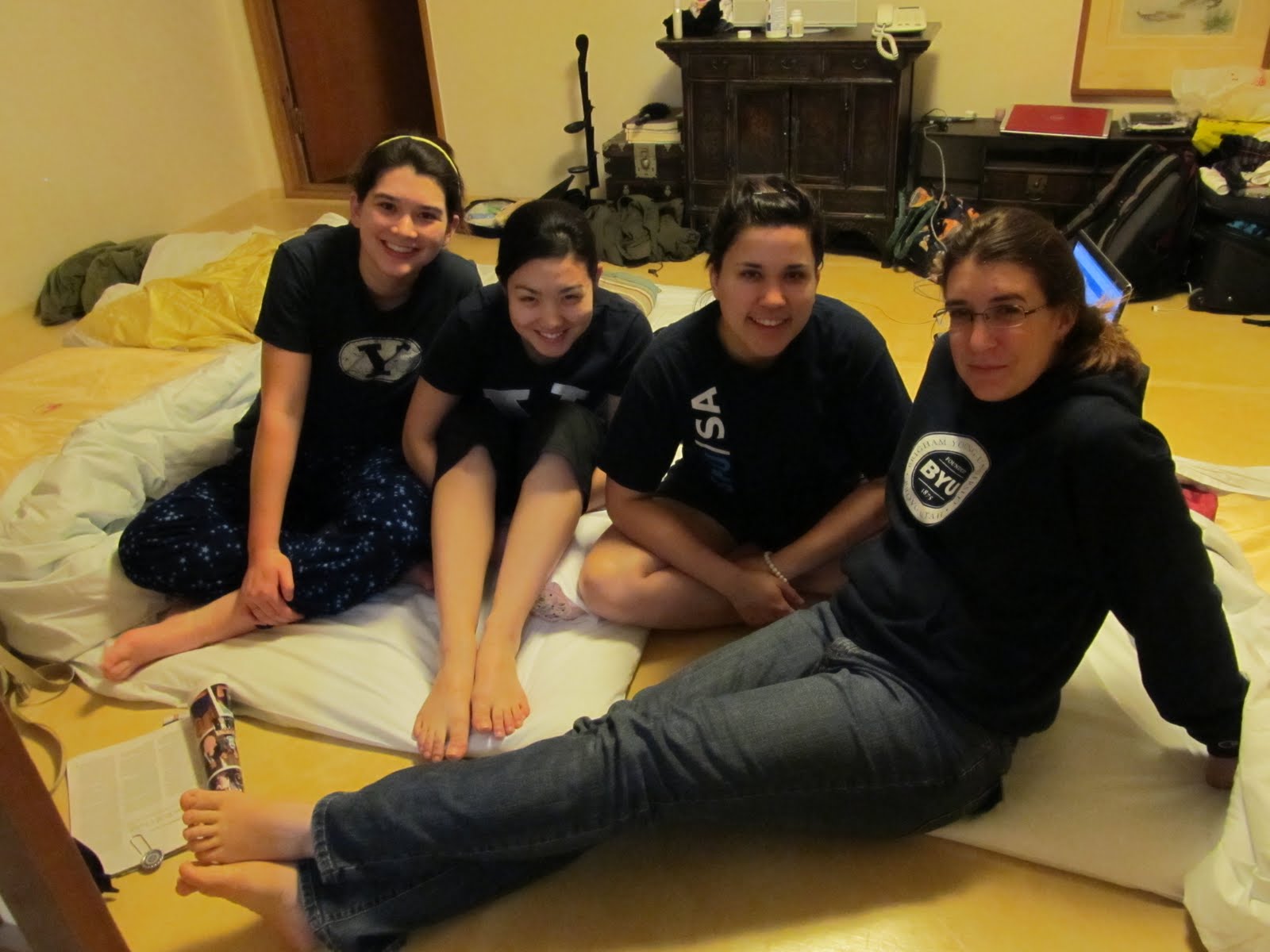
Back on May 12th, the first day after the Lamson's had left, we were FINALLY able to have a normal day of class. Our routine is to be completely ready to go for the day by 9 AM, at which point we "open the day" (a term often used exclusively by Korean LDS missionaries) with a hymn (in Korean of course), a prayer and a spiritual thought. Then we have 2 hours of lecture from Dr. Peterson - which seems like a long time when your butt goes numb from sitting on the floor. After lecture there is an hour of language practice where 2 "juniors" (below 300 level language students) will be taught by 1 "senior" (above 300 level - usually a returned missionary). After language practice that day, Dr. Peterson took us all out to lunch at Bonjook (본죽). Jook is basically the Korean word for "porridge" - but restaurant jook is WAY more dressed up and delicious than what poor people used to eat back in the day.
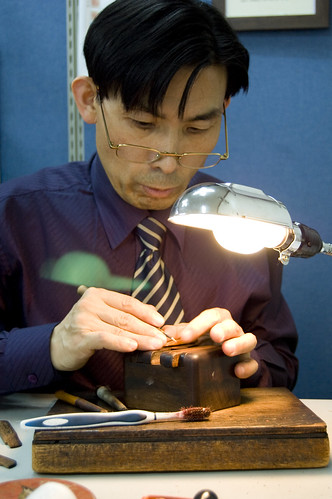
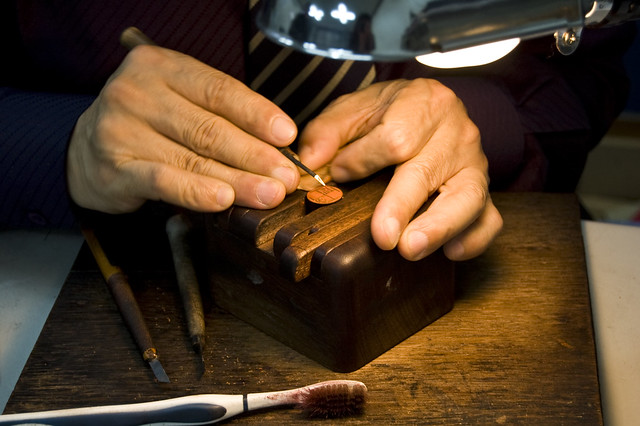
After lunch we were sent out on language practice "field trips": each senior takes his two juniors to a willing establishment in town and they all try to have a conversation with the owners/employees/anyone who'll talk. I was with Steve (the senior) and Ben (a fellow junior I first met in Korean 101). We struck out at the first two suggested places, but Steve really wanted to visit a dojang (도장). Both Ben and I assumed he meant a Taekwondo dojo, which are called dojangs in Korean. Turns out that we were completely wrong. Dojangs refer to stamp stores. Not postage stamps, but carved seals applied via red ink. They usually have the name of the seal's owner written in hanja with an added character at the end pronounced "een" (인) which means "stamp". The owner of the store was willing to talk to us and before we knew it we were getting a lesson in the history of hanja fonts, what stamps were used for and how he makes his stamps. We also found out he was a Jehovah's Witness, so his knowing we were LDS gave us some interesting religious topics to discuss. We didn't want to take up too much of his time, but by the time we were done talking I was convinced I wanted to have my own stamp. Steve was bent on getting one as well, so we discussed prices and set up an appointment to come back the following afternoon. It turned out that he actually hand carves each stamp (rather than using a computer-operated laser) so we wanted to watch him carve our stamps - luckily he was more than happy to let us watch him.
When we went back the next day (Friday the 13th - yikes!) we discussed what exactly we wanted for our stamps. We already decided that we wanted both our stamps to have handles shaped like our "dee" (띠) or zodiac years (in my case a horse), but we still had to officially decide on how our names were to be written in hanja and in what style. I didn't know what the correct hanja was for my name (lee sumin = 이수민) but I knew what the meaning of it is supposed to be: it means calm, warm water. The dojang sunsangnim (선생님 = a term usually referring to teachers or as a kind of catch-all for those older than you) gave me most popular character for 이 (which I found out is actually the correct hanja since my bon-gwan is one of the top two origins for the Yi surname), but for 수 (which usually refers to "water") there wasn't a character that is allowed for use in names (there is a set list of hanja that can be used for names in order to keep names from using crazy obscure characters that people won't recognize). So instead of 수 meaning "water", he decided to give me the character meaning "beautiful" - but he described "beautiful" as meaning wholly and amazingly beautiful inside and out. The 민 character then needed to mean "gentle" or "mild" or "calm" - the character we found means "patient" but patient in the sense of having quiet diligence. Steve explained that it is along the lines of when the 2000 stripling warriors were described as "obeying with exactness". I was more than happy to have characters that described such wonderful attributes!
Turns out that this guy is amazing - Steve pretty much worships this man now. He took an official exam that tests your knowledge of 3500 hanja characters which he passed (and which certificate of accomplishment is displayed prominently above his work station). He claims to know over 5000 characters though! And he hand carves each seal. And he was giving us the JW version of the first discussion while he was working. I even got a Korean pamphlet on the JW view on creationism. It was a very interesting afternoon. What I was most grateful for was that he was chillax enough to allow me to photograph him while he worked. He is so deft with his hands! It's insane.
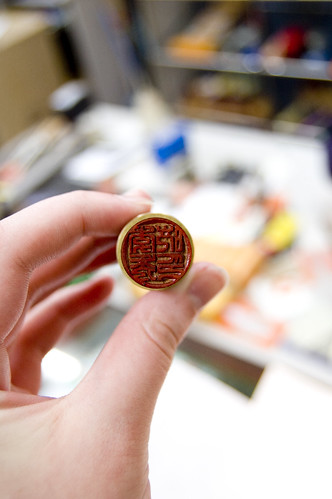
In the very last photograph is what my seal looks like when you stamp it. You read it from the top right corner (1), down one (2), over to the top left corner (3) and then down again (4). I got the style of characters that is the clean "print" style of calligraphy. It was a messy stamp job - my apologies. Guess I'll just have to practice!